Second Friday Lecture Series
The Second Friday Lecture Series is a monthly Civil War lecture program organized by the Civil War Museum of Kenosha, Wisconsin. All programs are held for an in-person audience at the museum. The lectures are recorded and posted to the museum’s YouTube channel.
The Second Friday Lectures begin at 12:00pm and there is no cost to attend. The Civil War Museum graciously thanks the Milwaukee Civil War Round Table and Iron Brigade Association for sponsoring this series of lectures.
The Organ of the Soldiers: An Introduction to Civil War Camp Newspapers
Friday, May 8 | 12pm-1pm | Presented by: Dan Freas
“Camp newspapers are a feature of the war that is worth attention,” reported a St. Louis newspaper in 1862. “The camp paper is the organ of the soldiers, through which they communicate their condition, wants, enjoyments, and local news to the public, and to their distant friends.” Historians have documented more than 200 camp newspapers printed during the Civil War. The majority of these publications were published by printers in Union regiments using confiscated shops, equipment and materials in occupied southern communities. A few were created using portable printing offices. Mr. Freas’s presentation will introduce you to the printers, technology, and content from some of these camp newspapers which, given the lack of military or government censorship, provide honest and intriguing accounts of the soldier experience. An emphasis will be placed on camp newspapers associated with the Upper Middle West.
Dan Freas recently retired from a 42-year career in program development and administration of historic sites and museums, most recently serving for 12 years as the director of Old World Wisconsin. A native of Western Pennsylvania, Dan’s interest in the Civil War began at a young age during a family trip to Gettysburg. His father worked for his hometown newspaper and one of Dan’s first jobs as a living history interpreter was working in a historic print shop. With a little bit of ink running through his veins, he is now combining interests in printing and the Civil War through research and writing about camp newspapers and field printing during the conflict.

Gettysburg in Color: Volume 3: Sacred Ground, 1863-1938
Friday, June 12 | 12pm – 1pm | Presented by: Patrick Brennan
The third and final entry of this groundbreaking trilogy examines the battlefield’s transformation from post-battle Hell to American shrine. Patrick Brennan used an artificial intelligence-based computerized color identifier, which results in a monumental full-color study of the important three-day battle like it has never been seen before. This sweeping installment closes his three volume series, which every student of history in general, and the Civil War in particular, will want to own for a lifetime.

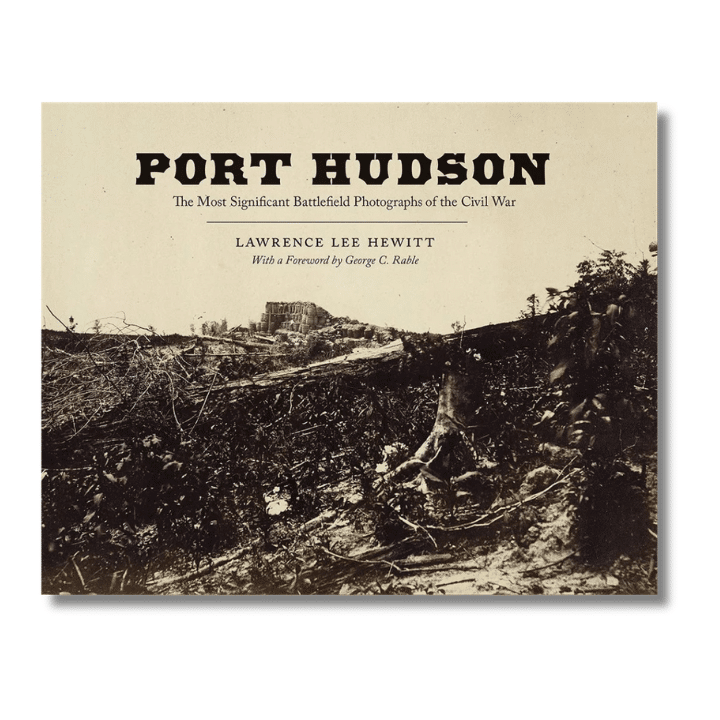
Port Hudson: The Most Significant Battlefield Photographs of the Civil War 2.0
Friday, July 10 | 12pm – 1pm | Presented by: Dr. Lawrence Hewitt
Between June 14 and July 9, 1863–the final 25 days of the 48-day siege of Port Hudson–the photographic firm of McPherson & Oliver moved about the battlefield memorializing soldiers in action–and in combat! In the process of making this visual record of opposing armies actively engaged, the photographers created one of the greatest visual records of the Civil War. Their images included one taken at midnight (the first ever taken in the dark), one converted into a composite print (created by combining portions of two negatives), the Confederate army at the surrender ceremony, and examples of time-lapse photography. Sadly, the duo seldom receives credit for these images. Other studios, including Matthew Brady’s, published the McPherson & Oliver’s images as their own work. As with the battlefield they immortalized, McPherson and Oliver deserve better.
Lawrence Lee Hewitt was a professor of history at Southeastern Louisiana University. He has authored Port Hudson, Confederate Bastion on the Mississippi and coedited four volumes of essays under the collective title of Confederate Generals in the Western Theater and three volumes of essays under the collective title of Confederate Generals in the Trans-Mississippi Theater.
Civil War Immigrant Soldiers in the Union Army
Friday, August 14 | 12pm – 1pm | Presented by: Scott Norrick
Scott Norrick’s presentation will cover the key reasons immigrants came to America just prior to the Civil War. He will also discuss the scope and nationalities of immigrant soldiers in the Union Army as well as explore what motivated so many immigrants to volunteer for the Civil War. He will also delve into specific Upper Midwestern regiments that had large immigrant populations, such as the 32nd, 35th and 61st Indiana and the 23rd and 24th Illinois. Scott will also give some advice on best practices for researching your Union Civil War ancestors.
Scott Norrick’s passion is connecting people to their past. He has an undergraduate degree from the University of Illinois and a master’s degree from Northwestern University. He combines over 30 years of family history research with the necessary skills and passion to provide meaningful and proven results in breaking down family history brick walls. He is currently working on a book that chronicles the war time experiences and the post war trauma of his four great-great grandfathers that were volunteers in the Union Army during the Civil War.
Freedom Seekers and the Underground Railroad in Illinois and on Lake Michigan
Friday, September 11 | 12pm – 1pm | Presented by: Dr. Larry McClellan
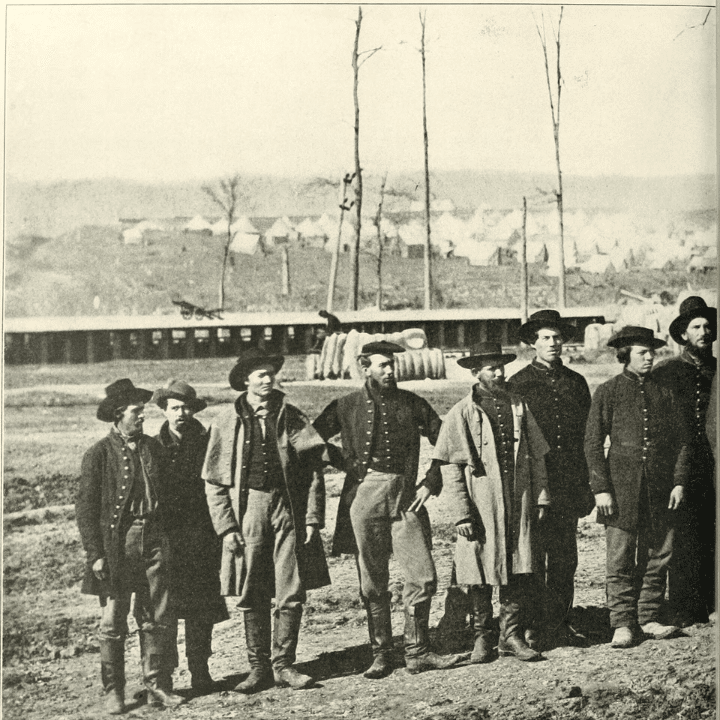
Dr. Larry McClellan’s program is an exploration of the journeys of freedom seekers and the networks of response that became the Underground Railroad across Illinois and onward to Detroit and freedom in Canada. As Dr. McClellan will explain, for many coming to northeastern Illinois, their journeys to freedom combined both overland routes and travel on Lake Michigan.
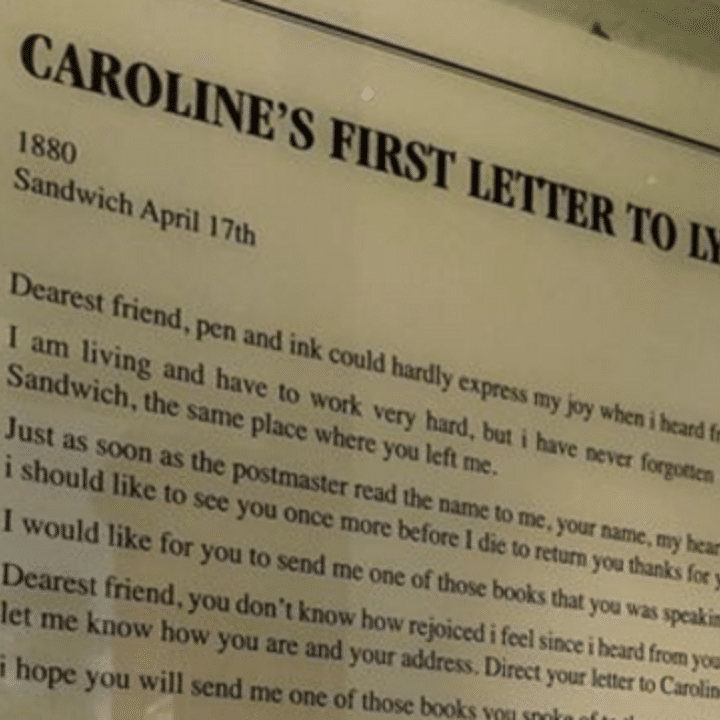
Dr. Larry McClellan has written extensively about the Underground Railroad in Illinois and served on the state 2024 Task Force to create the Illinois Freedom Trails Commission. His major publications include 25 articles in the Encyclopedia of Chicago [2005]; The Underground Railroad South of Chicago [2019], co-author of To the River, The Remarkable Journey of Caroline Quarlls, a Freedom Seeker on the Underground Railroad [2019]. Onward to Chicago: Freedom Seekers and the Underground Railroad in Northeastern Illinois [2023], published by Southern Illinois University Press. This received the national 2023 Memorial Prize for the Advancement of Knowledge from the Underground Railroad Free Press and a book award from the Newberry Library in 2025. In 2022 he received a Lifetime Achievement Award from the Illinois State Historical Society for his contributions to Illinois history and, in 2024, he served on the Illinois Underground Railroad Task Force reporting to the state legislature.
After graduate work at the University of Chicago, in 1970 Dr. McClellan helped create Governors State University south of Chicago and served there for 30 years. He is Emeritus Professor of Sociology and Community Studies. In the mid-70s, he was mayor of University Park (then Park Forest South). He spent four years as a senior consultant with the Northeastern Illinois Planning Commission, and throughout his career, served as pastor with diverse congregations. His consulting, research and writing focus on freedom seekers and the Underground Railroad, and on African American and regional history south of Chicago.
Public Programs
Public programs are free to attend and pre-registration is not required unless otherwise noted.
Kenosha Pops Season Opening Concert
Saturday, June 13 | 2pm – 4pm
The Kenosha Pops kick off their summer concert season with their annual indoor option concert in the Civil War Museum’s Freedom Hall. The concert features some of our country’s most recognizable patriotic songs and marches, making it a great way to celebrate the 250th birthday of the United States of America.

My Dear Hamilton by Laura Kaye and Stephanie Day
Thursday, June 25 | 12pm – 1pm | Discussion led by: Emily Mentzel | Free, registration appreciated | Register for Museum Book Club
From the New York Times bestselling authors of America’s First Daughter comes the epic story of Eliza Schuyler Hamilton–a revolutionary woman who, like her new nation, struggled to define herself in the wake of war, betrayal, and tragedy. Haunting, moving, and beautifully written, Dray and Kamoie used thousands of letters and original sources to tell Eliza’s story as it’s never been told before–not just as the wronged wife at the center of a political sex scandal–but also as a founding mother who shaped an American legacy in her own right.

The Power of Song in Democracy
Tuesday, July 14 | 6:30pm – 7:30pm | Performed by: Chris Vallillo | Free, registration required | Register for Power of Song
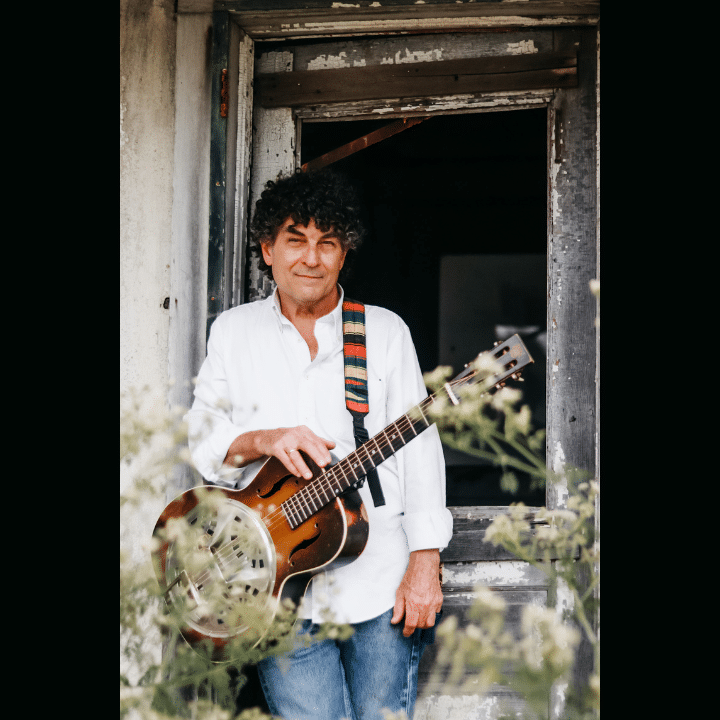
Popular music has always been a powerful tool to shape opinion and share the news of the day and is built into the DNA of our democracy. “The Power of Song in Democracy” is a celebration of our country’s 250th anniversary that explores how music was used as a political and social tool throughout the history of our nation. From the Revolutionary War, through the modern day struggles for equality and justice, music has been a potent tool to share ideas, inspire the public and create solidarity. Artist Chris Vallillo performs a wide range of music from the span of our nation’s history. Combining well-known and obscure pieces, Vallillo shares the music, history, and the back stories that shaped the course of our nation.
Chris Vallillo is a singer/songwriter and roots musician who makes the people and places of “unmetropolitan” America come to life in song. Having spent the last 30 years in the rural Midwest, he has a natural affinity for American roots music. Performing on six-string and bottleneck slide guitars, Vallillo weaves original, contemporary, and traditional songs and narratives into compelling and entertaining portraits of the Midwest. Diary Linen Magazine described the music as, “vivid, original story songs” while Folk Wax Magazine Editor, Arthur Wood said “Vallillo’s guitar playing flows like warm honey and is a true aural delight.”
Weather permitting, this concert will take place outside on the Civil War Museum Terrace.
Living History at the Civil War Museum with The First Michigan Engineers
Saturday, August 8 | 10am – 4pm
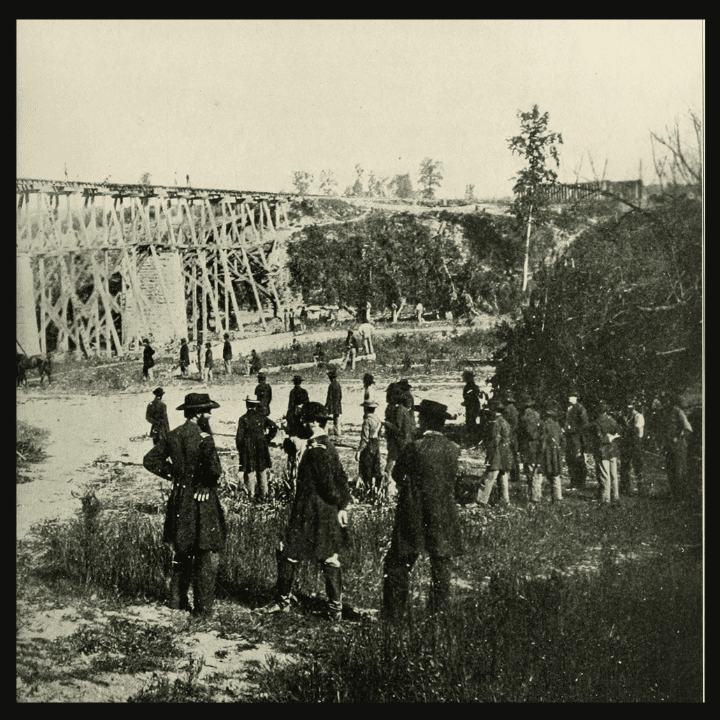
At their outdoor encampment, the 1st Michigan Engineers will show museum visitors the regiment’s role as combat engineers while displaying and explaining the many tools and pieces of equipment that were used to accomplish their surveying and construction duties. The living history group will also display items used by the engineers in combat roles.
The present-day 1st Michigan Engineers and Mechanics, Company E, has been in the Chicago area since 1987. Over the years, the regiment has participated in combat and engineering roles at reenactments throughout the Midwest and national events at 1st Bull Run, Shiloh, Perryville (KY), and Bentonville (NC). Some of the items constructed at events include hand drawn field maps, bridges, a 33-foot signal tower, and plank roads.
Special Exhibition Programs
Special Exhibition programs are free to attend and pre-registration is not required unless otherwise noted.
The 8th Illinois Cavalry: History and Anecdote
Wednesday, July 1 | 12pm-1pm
From 1861 to 1865, the 8th Illinois Cavalry—a Federal mounted regiment from Northern Illinois—transformed themselves into one of the finest fighting cavalry units in the Union Army.
The regiment’s most famous moment came on July 1, 1863, when troopers from Company E ot the 8th Illinois Cavalry stood watch three miles west of the town of Gettysburg, Pennsylvania. Shortly before 6:00AM that day, two privates from the 8th noticed a large cloud of dust rising from the road in front of them. These two, Thomas Kelly and James Hale, reported their observations to Lieutenant Marcellus E. Jones at the regimental headquarters.
Lieutenant Jones rode west to the outpost. While taking cover behind a rail fence at 7:30AM, he heard one of the men call out, “Here they come!” Jones borrowed a carbine from Sergeant Levi Schaffer, rested it on a fence rail, and fired at a Confederate officer riding a white horse. The shot was at extreme range and missed the target, but Jones had fired the opening shot of the Battle of Gettysburg.
Don McArthur-Self’s program will be an overview of the history of the 8th Illinois Cavalry from its organization to its mustering out on July 17, 1865. His talk will also provide the audience with biographies of some of its more colorful members.
Don McArthur-Self recently retired from teaching high school history after 34 years, 27 of them at Maine South High School in Park Ridge, Illinois. In addition to teaching high school, for the last 13 years he has reenacted and researched the 8th Illinois Cavalry; in 2018 he spent a week studying the Battle of Gettysburg at Gettysburg College with Dr. Allen Guelzo. In his spare time he enjoys visiting small town cemeteries and looking for letters and diaries of 8th Illinois officers and troopers. He lives in Naperville, Illinois.
Sign up for our eNewsletter!
News about Civil War Museum workshops, events, exhibits, and more, delivered to your inbox